thomson
-
Read More
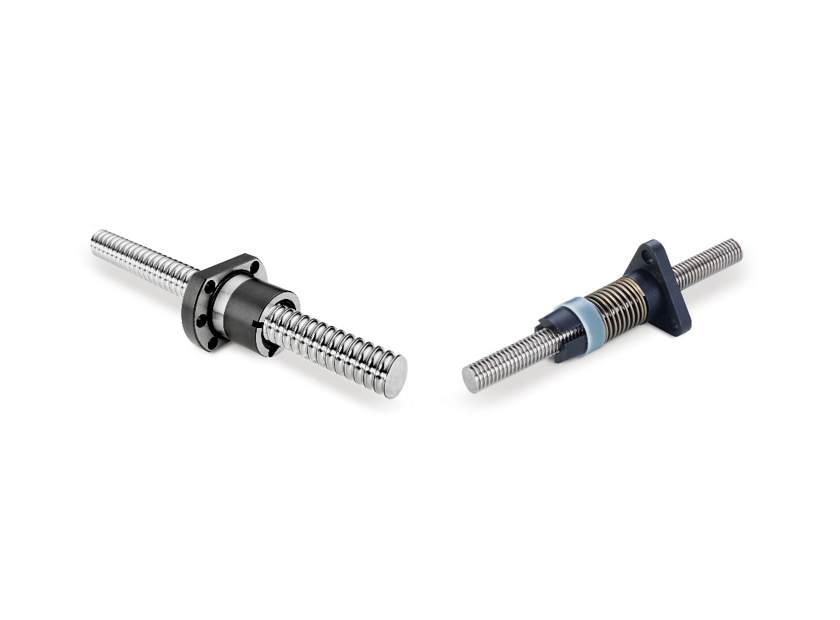
When determining if an application calls for a lead or ball screw, your decision should be guided through evaluating the inherent advantages and disadvantages of each. This evaluation process can have a significant impact on the performance and economic benefits of linear motion projects. The first step comes from understanding how they differ. Both ball and lead screws use threaded rods to convert from rotary to linear motion. Ball screws, as the name would imply, use recirculating ball bearings to minimize friction. Lead screws, by contrast, rely on a low coefficient of friction from sliding surfaces.
Categories
- Gear boxes (1)
- Safety. (3)
- Safety (2)
- PMA Cable Protection Robotics (1)
- PMA cable protection (4)
- Cable Protection Robotics (0)
- Connectors (4)
- Gearboxes (4)
- PMA Cobot kits (1)
- Flexible Cables (4)
- ILME (5)
- ILME (1)
- Treotham Automation (2)
- Wittenstein (3)
- Gripper (0)
- Safety (12)
- Actuator (1)
- Lead Screw Nuts (1)
- Hygienic (6)
- Robot Cables (1)
- Wenglor (16)
- igus (102)
- Wieland (1)
- Wieland (0)
- Robot conduits (0)
Recent Posts
Archive
Tags
igus
wenglor
euchner
bearings
energy chain
ilme
connectors
drylin
wittenstein
iglidur
igubal
lapp
automation
cables
chainflex
bearing
hygienic
food processing
igus energy chain
food industry
ready to connect
sensor
cks2
stainless steel
safety
robots
igus rebel
energy chains
ethercat
robust
sensors
robotics
thomson
robot
linear units
actuator
emc
prm
igludur
treotham
inductive sensors
enclosures
locking
e-chain
prt slewing ring
cable glands
gear box
lubrication-free
cleanrooms
compact